YouTube Music makes it easy to find a song that already feels like yours, and it is natural to want that track as a ringtone instead of the default chime. You cannot set YouTube Music as a ringtone from inside the app. Even YouTube Music Premium downloads stay in YouTube Music for offline listening; they do not show up as ordinary MP3s in Android’s ringtone picker, and they will not appear under Sounds & Haptics on iPhone.
The missing piece is not a hidden switch in YouTube Music. It is a regular audio file your phone can actually see, and Sidify YouTube Music Converter is how we get that file. After the song is on your computer, you can set it as a ringtone on Android or iPhone. The detailed steps are below.
Can You Use YouTube Music as a Ringtone Directly?
No. YouTube Music has no ringtone option, and Premium downloads stay in the app for offline listening. The phone needs a local MP3 file it can read; Sidify YouTube Music Converter is how we get MP3 from YouTube Music.
Google’s help pages treat downloads as in-app playback only. They never offer an export-to-ringtone switch. Apple is stricter in a different way: a protected or streaming track cannot be used, and a full song sitting in the Music app will not appear under Settings > Ringtone on its own. Once you have an unlocked MP3, the two phones simply use different settings paths, as the table shows.
| What you need | Android | iPhone |
|---|---|---|
| Can YouTube Music Premium downloads be used as-is? | No. They stay inside the YouTube Music app. | No. They stay inside the YouTube Music app. |
| File the phone expects | A regular MP3 (or similar) on the device | A short, unprotected audio clip, then export as a ringtone |
| Typical length | No strict system cap for a ringtone file | Up to 30 seconds for a custom ringtone |
| Where you set it | Settings > Sound & vibration > Phone ringtone | GarageBand export, then Settings > Sounds & Haptics > Ringtone |
| Best first step | Convert the YouTube Music track to MP3 with Sidify YouTube Music Converter | |
Part 1: Download YouTube Music as MP3 with Sidify
Sidify YouTube Music Converter runs on Windows and Mac and saves the YouTube Music song as a local MP3. It works with a free or Premium YouTube account, and it can convert tracks, albums, or playlists.
You do not need a separate recorder or a browser trick. Open Sidify, add the song or batch a few candidates from a playlist, set the output to MP3, and convert. The file keeps original quality (up to 320kbps) and ID3 tags such as title, artist, album art, and lyrics, so it is easier to find when you move it to the phone. Conversion is up to 10 times faster than real-time playback. Sidify can also export AAC, WAV, FLAC, AIFF, or ALAC if you want a lossless archive later; for a ringtone, MP3 is the practical choice. Android accepts it as-is, and iPhone can import it through Files into GarageBand.
Sidify YouTube Music Converter
- Download YouTube Music tracks, playlists, and albums as local files.
- Convert in batches with a Free or Premium YouTube account.
- Export MP3, AAC, WAV, FLAC, AIFF, or ALAC.
- Keep ID3 tags such as title, artist, and track number.
- Convert at up to 10× faster speed.

 Tips:
Tips:If you also save songs from Spotify, Apple Music, Amazon Music, Tidal, or Deezer, Sidify All-In-One covers those libraries in one place. For this ringtone job, the dedicated YouTube Music Converter is enough.
How to Convert YouTube Music to MP3 with Sidify
The free trial converts the first minute of each song, which is already enough to test a ringtone clip. Activate the full version when you want the complete track, then follow the steps below.
Step 1 Open Sidify YouTube Music Converter
Install Sidify on your Windows PC or Mac and launch it. The built-in YouTube Music player loads so you can sign in and browse the library without jumping between apps.
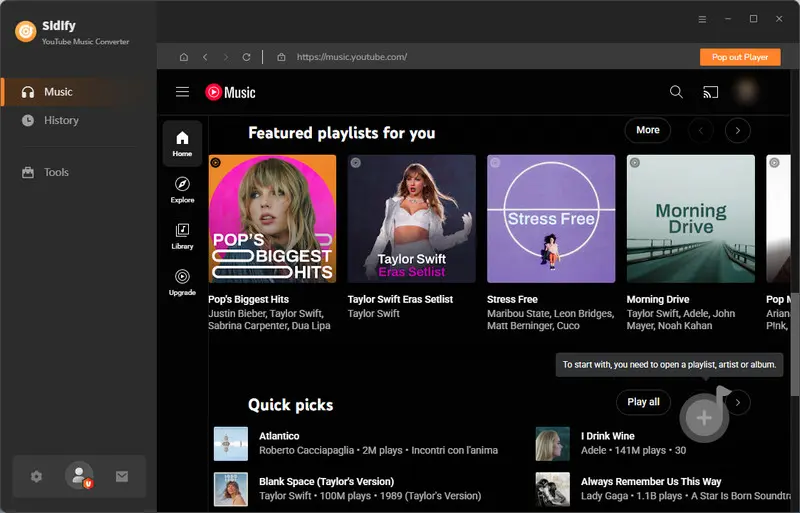
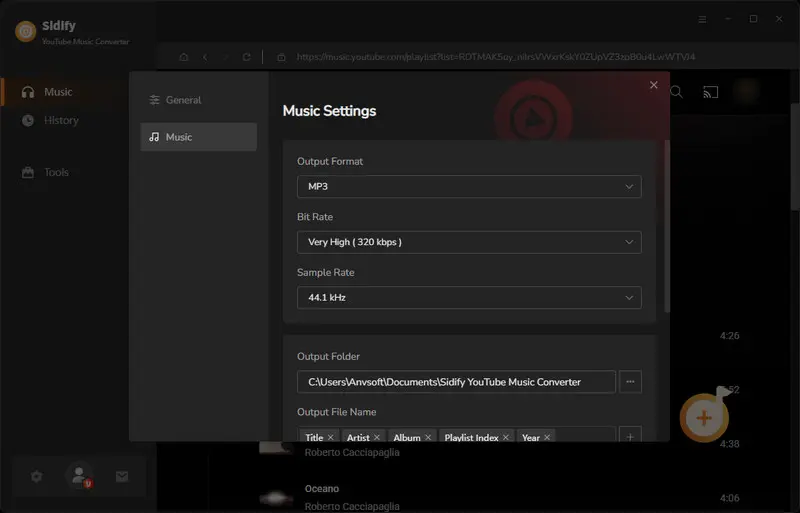
Step 2 Set the output format to MP3
Open Settings and choose MP3. You can also raise the bitrate if you care about sound, and pick a folder you will remember, because that is the folder you will copy from when you move the file to your phone.
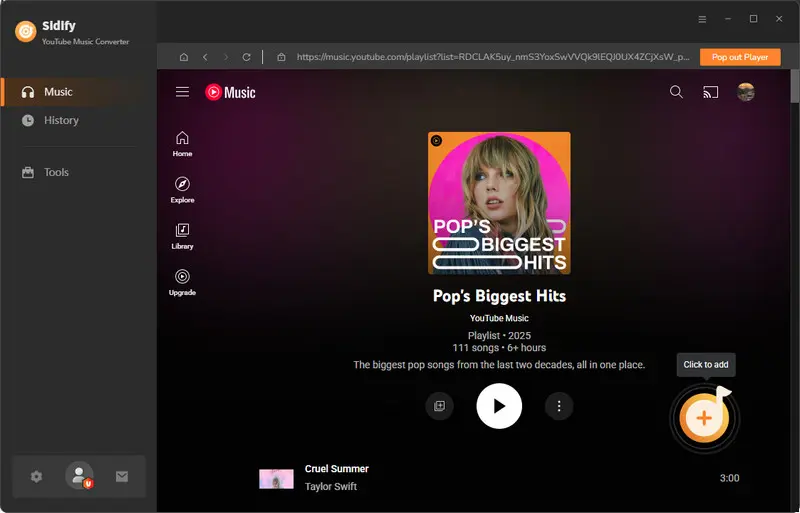
Step 3 Add the song you want as a ringtone
In the YouTube Music window, find the track, album, or playlist. Click Click to Add, then tick the songs on the conversion list. One song is enough for a ringtone; a short playlist is useful if you want to try a few hooks before you decide.
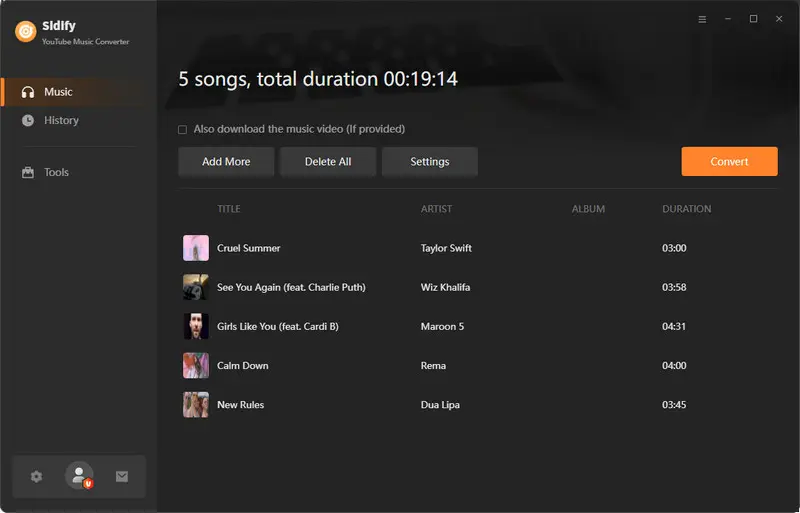
Step 4 Convert YouTube Music to MP3
Click Convert. Sidify downloads the audio and writes a normal MP3 on your computer, with title and artist tags intact.
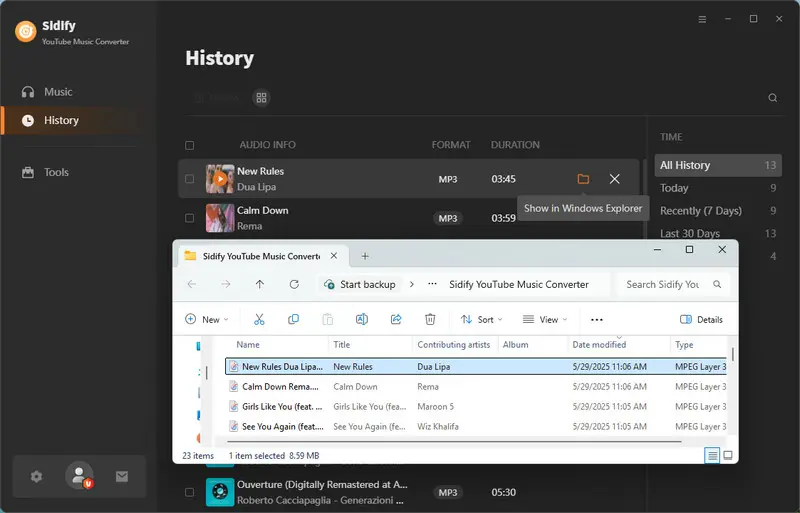
Step 5 Find the finished MP3
When the job finishes, open the Converted or History list and click the folder icon so you can copy that MP3 to your phone in the next parts. If you later want whole playlists as MP3, the same workflow scales; see the YouTube Music to MP3 guide for batch jobs.
Part 2: Set YouTube Music as a Ringtone on Android
To set YouTube Music as an Android ringtone, copy the downloaded MP3 into the phone’s Ringtones folder, then choose it under Settings > Sound & vibration > Phone ringtone.
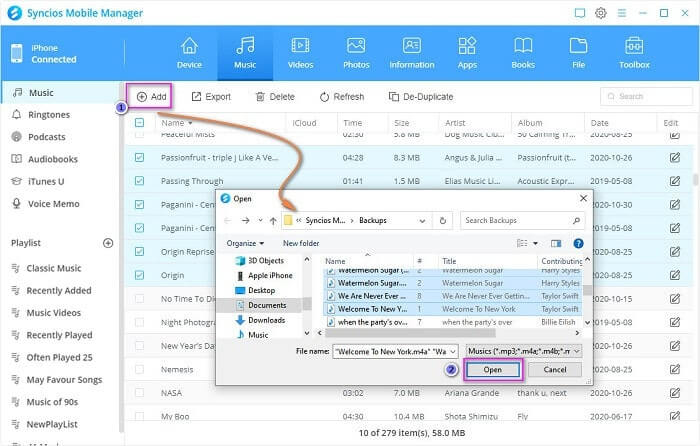
A local MP3 does not need a special export format, which is why this side is easier than iPhone. USB is the most predictable way to get the file onto the device; a free manager such as Syncios Mobile Manager can push it if you would rather not hunt through folders. Samsung and other skins often add an extra Add ringtone button, but the idea is the same. After the copy, give the phone a moment to index the file before you open Settings.
1. Copy the MP3 into the Ringtones folder
Step 1 Connect the Android phone to your computer with a USB cable and set the phone to file transfer if it asks.
Step 2 Open the phone’s storage window and find the Ringtones folder. Copy the downloaded YouTube Music MP3 into that folder. Alarm sounds use a different folder, so keep ringtone files here if the goal is incoming calls.
Step 3 Eject the phone so the track is now a local file the system can see.
2. Choose the YouTube Music file in Settings
Step 1 Open Settings and go to Sound & vibration (some phones label this Sound, Sounds and vibration, or Sounds and haptics).
Step 2 Tap Phone ringtone or Ringtone, depending on what your phone calls it.
Step 3 Pick the downloaded MP3 from the list. On Samsung and several other skins you may need to tap Add or Add ringtone first, then browse to the file.
If the song does not appear, confirm it is really in the Ringtones folder and that the format is MP3. You can also open Files by Google, find the audio file, tap More, and choose Set as ringtone, which is Google’s documented shortcut on phones that include that app.
Tips:Want the same clip as an alarm? Copy a second file into the Alarms folder, or assign it in the Clock app. Notification sounds follow the same idea: local file first, then the matching setting.
Optional: Trim the hook before you set it
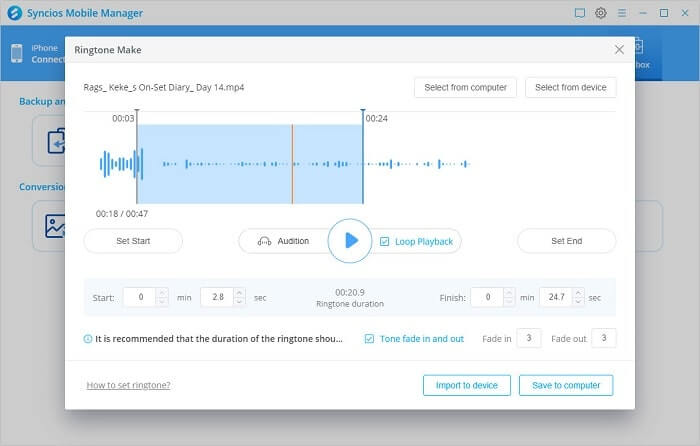
A full three-minute track can feel slow when someone calls. If you only want the chorus, trim the MP3 on the computer, then copy the short clip to Ringtones. Syncios includes a Ringtone Maker under Toolbox: select the file from the computer, mark the start and end, and import the clip to the phone. Android does not force a 30-second cap the way iPhone does, but a tighter loop still sounds more like a ringtone and less like a concert.
Part 3: Set YouTube Music as an iPhone Ringtone
To set YouTube Music as an iPhone ringtone, import the downloaded YouTube Music MP3 in GarageBand, keep about 30 seconds, and export it as a ringtone.
iPhone will not let you open Settings, tap Ringtone, and choose a full song from the Music app, which is why the old “sync it to Music” shortcut fails for most people. Apple’s current help page is titled Create a custom ringtone on your iPhone. Protected streaming tracks show up greyed out in GarageBand and cannot be used.
Get the MP3 onto the iPhone first. AirDrop from a Mac, iCloud Drive, or a USB transfer tool all work. Put the file in the Files app, not only in Music, because GarageBand looks in Files when you browse for audio.
Create the ringtone in GarageBand
If GarageBand is not installed, download it from the App Store, then follow the steps below.
Step 1 On the Home Screen, touch and hold the GarageBand icon and tap Create New Audio Recording.
Step 2 Switch to Tracks view, tap the track icon on the left, then tap the Loops Browser. Choose Files and browse to the downloaded YouTube Music MP3. (If you tap Music instead, skip anything greyed out. Those files are protected and will not export as a ringtone.)
Step 3 Drag the audio to the start of the timeline. Trim it to 30 seconds or less by dragging the edges of the region. Move the clip all the way left so the ringtone does not begin with silence.
Step 4 Tap the navigation button and go to My Songs. Select the song, tap Share, then tap Ringtone. Name it and tap Export. If it is longer than 30 seconds, GarageBand offers to shorten it; you can also cancel and trim it yourself.
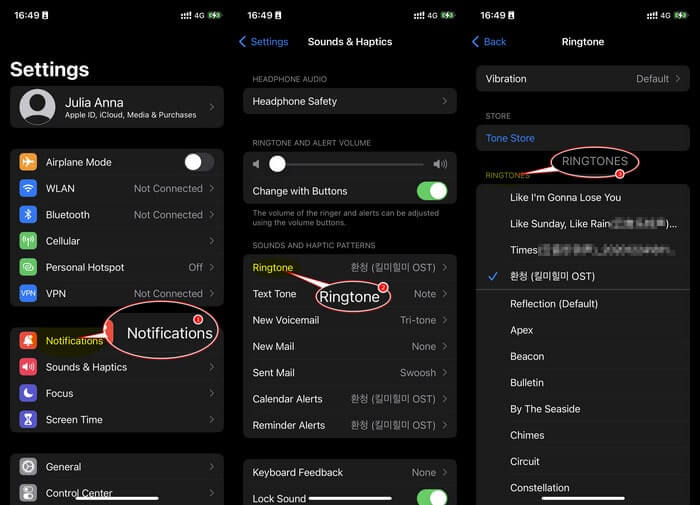
Step 5 After export, go to Settings > Sounds & Haptics. Under Sounds and Vibration Patterns, tap Ringtone, then tap your new tone to set it. For one contact, open Contacts, tap Edit, then Ringtone or Text Tone.
 Notes for newer iOS:
On some recent iOS versions, Files may show Use as Ringtone in the share sheet if the audio is already a short MP3 or M4A (about 30 seconds or less). That is a handy extra, not a replacement for GarageBand. If the option is missing, or the file is a full-length song, stay with the GarageBand steps above. You do not have to rename anything to .m4r when you export from GarageBand; Apple handles that during export.
FAQ about YouTube Music Ringtones
Can I set YouTube Music as a ringtone without downloading?
No. The YouTube Music app has no “use as ringtone” control. Streaming the song, or saving it for offline in Premium, still leaves you without a file the system ringtone picker can see. Sidify YouTube Music Converter is how this guide gets that file.
Does YouTube Music Premium let me use songs as ringtones?
Premium lets you download music for offline playback in YouTube Music. It does not turn those downloads into MP3s for Android Settings or iPhone Sounds & Haptics. You still convert the track if you want it as a ringtone, alarm, or text tone.
What format does an iPhone ringtone need?
Apple’s documented method is GarageBand: import an unprotected audio file, keep up to 30 seconds, and export as a ringtone. You do not have to rename anything to .m4r; Apple handles that during export. A full-length song in the Music app will not show up in the ringtone list on its own.
How do I set YouTube Music as a ringtone on Samsung or Pixel?
Put the downloaded YouTube Music MP3 in the Ringtones folder, then open Settings > Sound & vibration > Phone ringtone. Samsung often includes Add ringtone. On Pixel and other phones with Files by Google, you can also open the MP3 there and tap Set as ringtone.
Can I use YouTube Music as an alarm or text tone?
Yes, once you have a local file. Android alarms usually live in a separate Alarms folder or in the Clock app, and notification sounds follow the same idea. On iPhone, pick the tone in Settings > Sounds & Haptics, or assign Ringtone or Text Tone from a contact’s Edit card.
Why doesn’t my YouTube Music song appear in Ringtone settings?
On Android, the file may still be in Downloads instead of Ringtones, or it may still be an in-app YouTube Music download rather than a downloaded MP3. On iPhone, a Music library track is not a ringtone until you export it from GarageBand (or use a short file’s Use as Ringtone option on a newer iOS build).
Conclusion
Once the YouTube Music track is a file on your computer, the hard part is already done. Sidify YouTube Music Converter is the piece you will reuse the next time a song feels right as a ringtone. The same MP3 can later become an alarm, a text tone, or something you play without opening YouTube Music.
 Sidify YouTube Music Converter
Save YouTube Music as MP3 first, then set it as a ringtone on Android or iPhone. Keep tags, batch playlists, and convert at up to 10× speed.